
TestGenisys™
Generate validation test cases from your system build
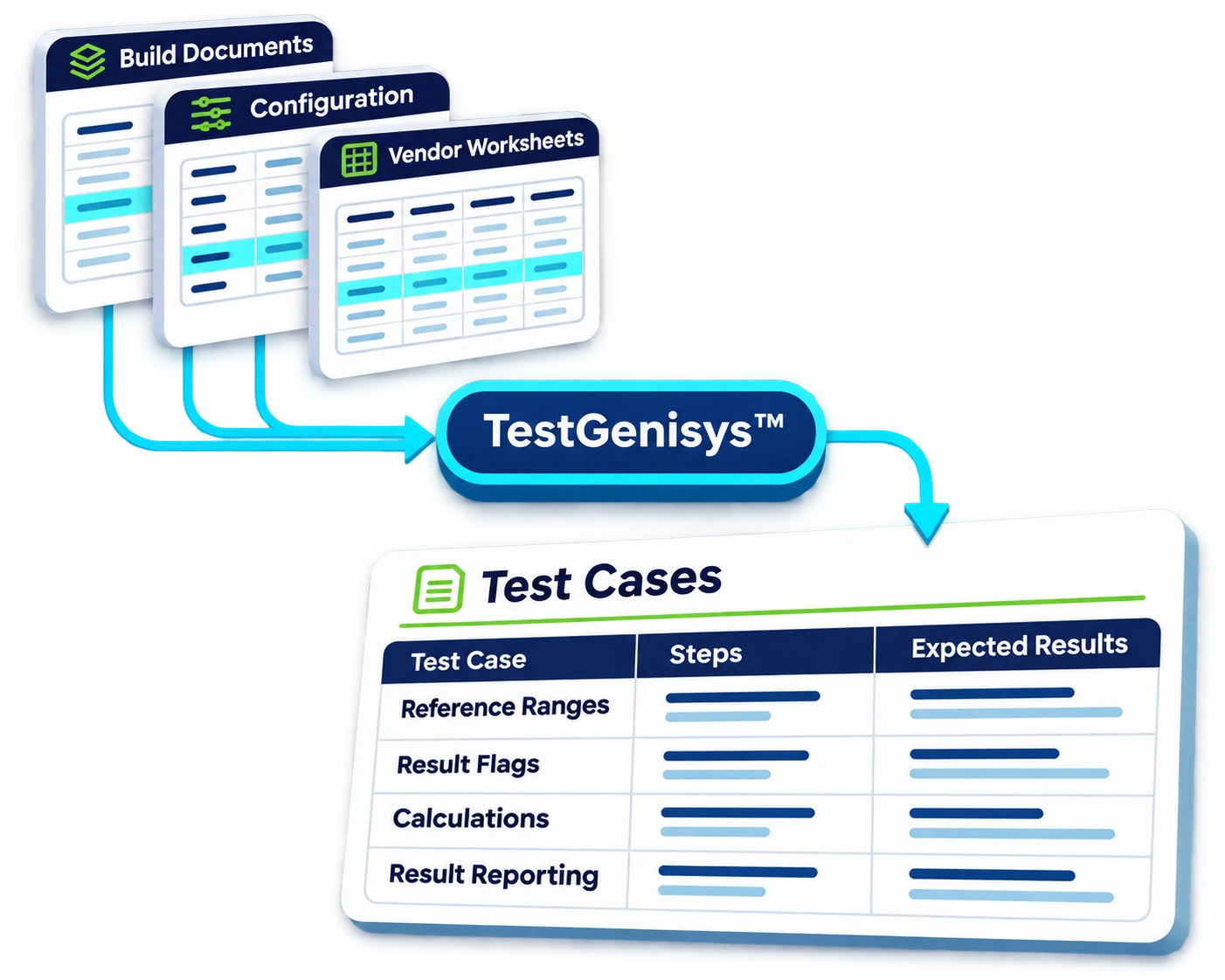
TestGenisys helps clinical laboratory teams turn build documents, vendor worksheets and system configuration data into structured, ready-to-execute validation test cases.
TestGenisys™
TestGenisys helps clinical laboratory teams turn build documents, vendor worksheets and system configuration data into structured, ready-to-execute validation test cases.
Up to 74%
fewer test cases to execute after optimization on a middleware project
14,500
test cases generated for a single Epic Beaker CCV2 project
273 hours
of estimated testing time saved on one middleware project
Before validation can begin, teams spend weeks turning build data, vendor documents and workflow decisions into test scripts. When that work is done manually, risk enters the process before testing even starts.

Teams start with a blank spreadsheet, deciding what needs to be tested, how each script should be written and where evidence should be captured.

Vendor worksheets, LIS/LIMS exports, middleware configuration and instrument documents are difficult to translate into clear, executable test cases.

Different sites, disciplines and analysts may approach testing differently, making it hard to ensure every workflow, rule and scenario is covered.

Manual test design consumes valuable time before testing even begins, delaying the transition from build review to hands-on validation.
TestGenisys helps generate structured validation test cases directly from system build data, vendor worksheets and project-specific workflow information.

Generate ready-to-execute validation scripts from LIS/LIMS build data, middleware configuration, vendor worksheets and project documentation.

Tailor test cases to each laboratory’s sites, disciplines, analyzers, order codes, rules, ranges and operational workflows.

Reduce variation in how teams design test scripts while improving confidence that required scenarios are included.

Spend less time building spreadsheets and more time validating the system, capturing evidence and resolving issues before go-live.
01

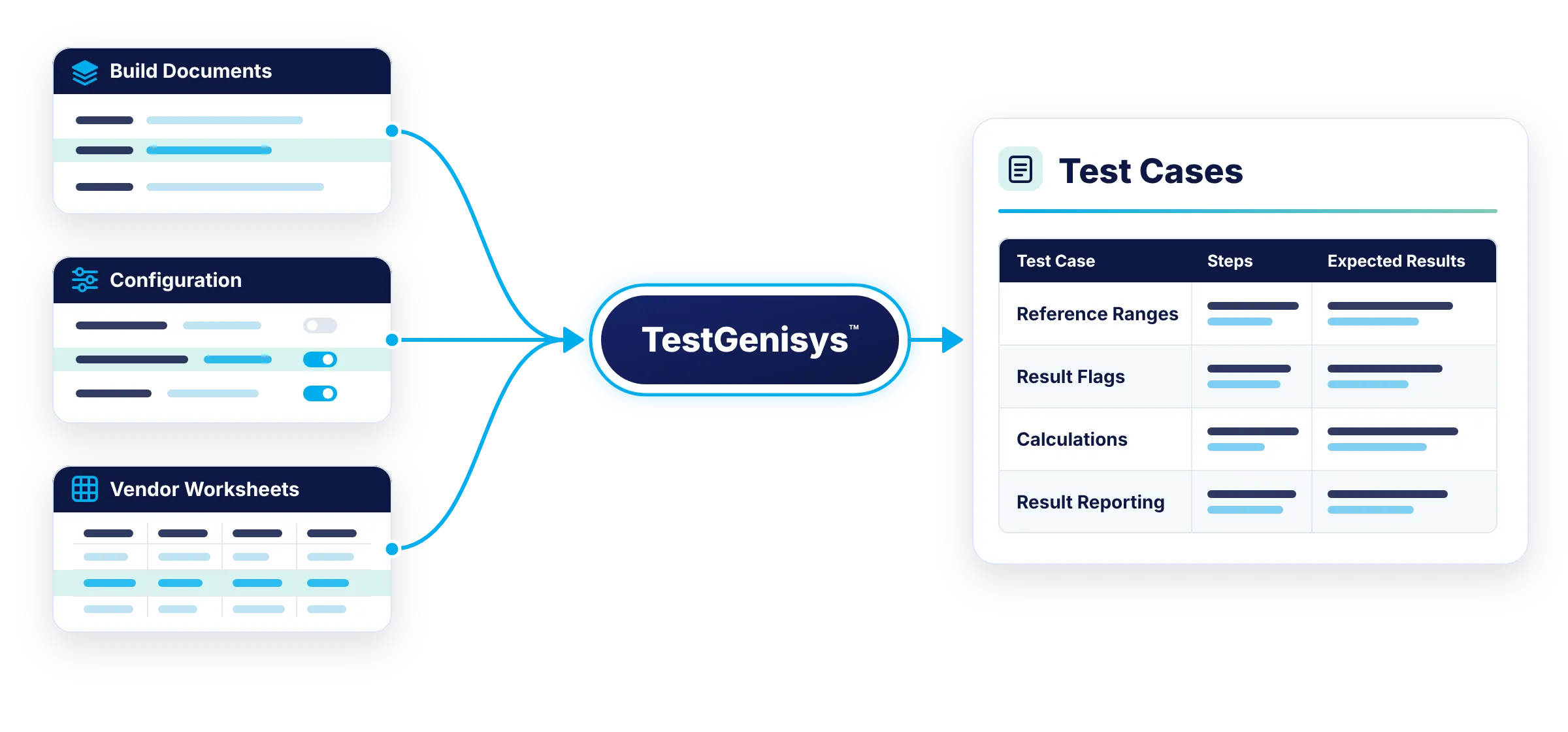
Start with the source information that defines how the system is configured and how each laboratory actually works.
This may include LIS/LIMS build exports, middleware configuration, vendor worksheets, instrument details, order codes, rules, ranges and site-specific workflow requirements. TestGenisys uses this information as the foundation for generating validation test cases that reflect the real implementation, not a generic testing template.
02

TestGenisys analyzes the build data, configuration details and workflow requirements provided, then automatically generates structured validation test cases tailored to the implementation.
Each test case is organized for efficient execution, with clear instructions, expected outcomes and evidence capture points. Once generated, the test cases are ready to import into Cymetryc for assignment, execution, tracking and approval.
03

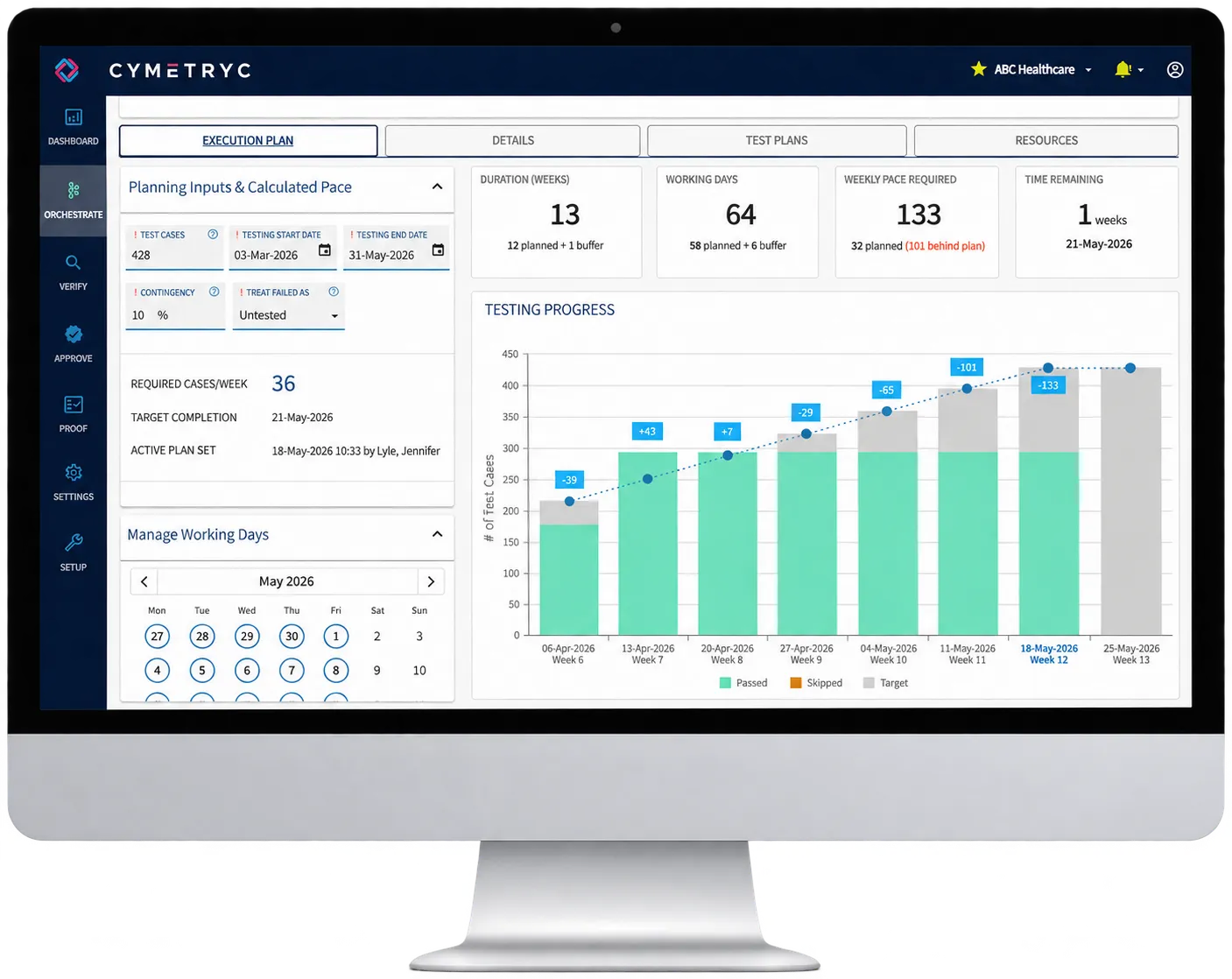
Once imported into Cymetryc, test cases can be assigned to the right testers, organized by site, discipline, workflow or project phase, and executed using Cymetryc’s guided testing tools.
Testers follow clear step-by-step instructions, capture screenshots and attachments as they work, log issues directly from the test case and submit results for review. Progress, issues and approvals are tracked in real time, giving project teams the visibility they need from execution through final documentation.
TestGenisys is already being used to generate optimized, ready-to-execute end-to-end software validation test cases for complex instrument projects. By grouping related tests and tailoring scripts to real workflows, teams can reduce redundant testing effort while maintaining full coverage.
*Note: Estimated time saved is calculated using 5 minutes per test case.

Security & compliance
SOC 2
Type 2
ISO
27001:2022
HIPAA
Compliant
GDPR
Compliant
