Login
Login
Book a Demo
Book a Demo


Implementing a new Laboratory Information System (LIS), such as Epic Beaker, represents a transformative step for your organization. With laboratory results constituting over 70% of a patient's medical record, the success of this transition is not just beneficial but essential for your organization, caregivers, and patients.
The task of replacing an LIS is monumental, and it's crucial to acknowledge the significant strain this places on your already overstretched lab operations team. LIS implementations differ from typical IT projects due to the stringent testing and validation requirements imposed by the lab's high standards and regulatory obligations. This necessitates:
While IT staff are responsible for the system build, LIS vendors universally agree that lab operations must take ownership of the implementation. This means your lab's Subject Matter Experts (SMEs) will be heavily involved, often feeling like they're juggling two full-time roles. This increased workload comes on top of their regular duties of processing thousands or even tens of thousands of test results daily, significantly heightening stress and pressure.
Despite providing tools for mass generating orders and results, and spreadsheets for tracking progress, LIS vendors like Epic do not offer solutions to alleviate the regulatory compliance burden.
How can you mitigate this burden and lighten the load on both the LIS build team and lab operations? Here are four actionable recommendations that promise significant time savings and quality improvements:
The process of ensuring the integrity of the clinical content entered into the new Laboratory Information System (LIS) by the build team is critical. This involves a thorough review of the data elements within the system, typically using vendor-supplied system output documents, to confirm clinical accuracy. Key areas to scrutinize include:
Conducting this review with precision and addressing any discrepancies identified by the IT build staff ensures a cleaner transition into subsequent testing phases. A well-verified build allows SMEs to concentrate on operational system validation during later stages, without the distraction of minor yet significant errors such as misspellings, incorrect units, misplaced decimal points, or erroneous reference ranges. This meticulous approach not only streamlines the validation process but also enhances the overall reliability and efficiency of the LIS.
The second phase of testing, known as functional testing or CCV2, involves rigorously evaluating the system's performance by simulating the placement and processing of orders within the LIS. This phase marks the initial point where validation must adhere to regulatory standards. Validation here entails:
You are investing in the best, most modern, integrated laboratory system of the 21st century. So, why try to validate this complex, state-of-the-art system with a generic spreadsheet tool from the 1980's?
Although vendors might offer a basic testing checklist in Excel, leveraging a more sophisticated approach for gathering and reviewing validation data significantly enhances the reliability and compliance of your testing process.
Consider matching your validation tools and processes with the cutting-edge technology you're implementing. Tracking your validation process in a spreadsheet is almost guaranteed to make these critical testing phases take longer, increase tester frustrations and make clinical review much more difficult. And despite the best of intentions, with a testing event of this magnitude, inevitably things will fall through the cracks – test cases will be missed, issues will go unresolved, and pressures will mount.
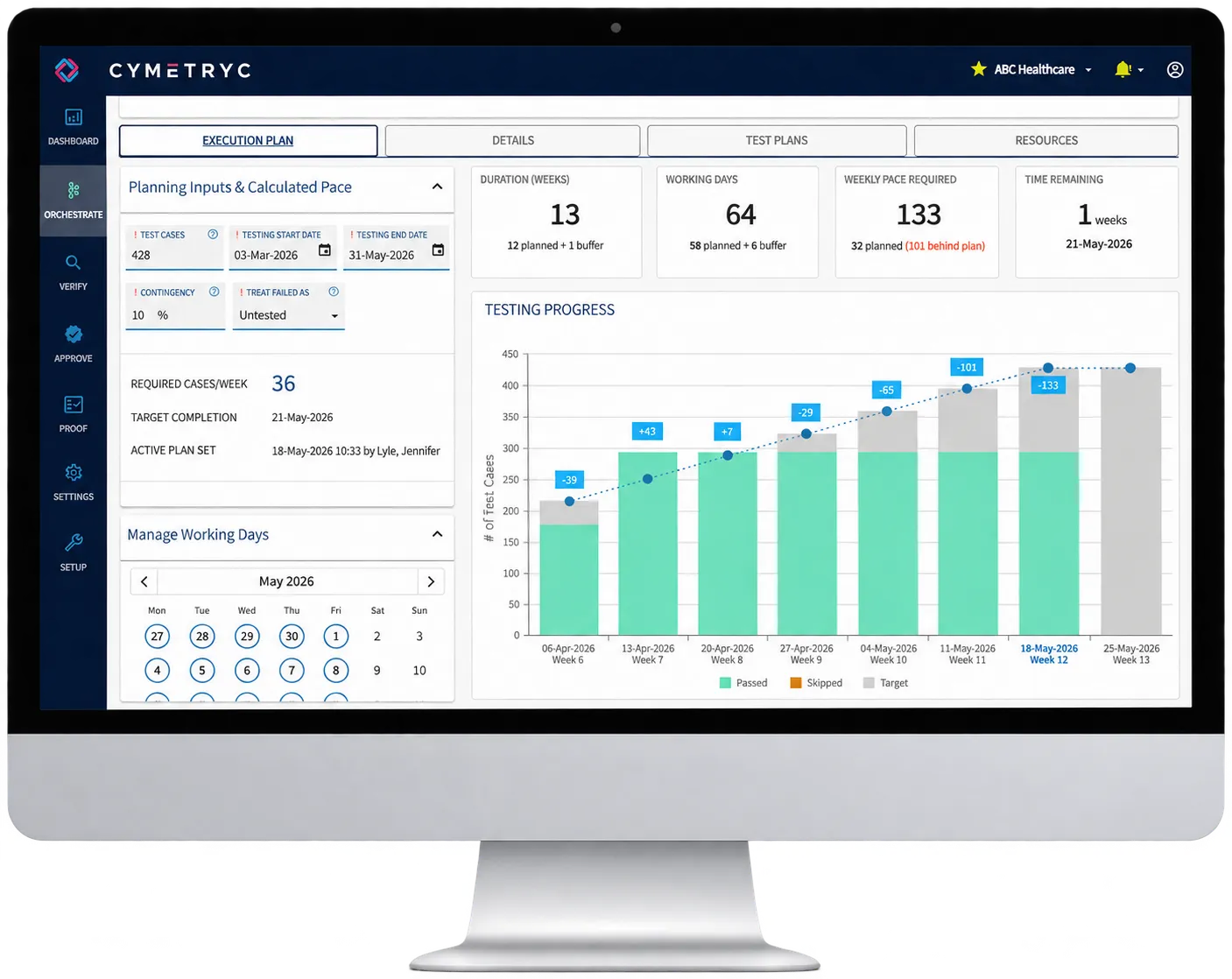
With a modern test planning and management platform, you can revolutionize the critical phases of your LIS implementation. While it's advisable to continue using the vendor's spreadsheet tracker for consistency, the benefits of a dedicated test management tool extend well beyond what traditional tools like Excel can offer:
Organize testing into logical, digestible buckets (e.g., Mnemonics, Equations, Reflexes). This helps lab operations testers to stay focused in a particular area and in a particular mindset. This technique also aids project managers in monitoring progress.
Consider standardizing the test case naming convention, using abbreviations for sites and sections to simplify sorting test cases for staff.
Example: <SITE>-<SEC>-<Testcase Name>
Offload tedious tasks, such as updating tracker spreadsheets, from your SME testers to improve their productivity. Allow testers to focus solely on testing, while project managers and IT testing coordinators handle tracker updates, facilitated by the test management tool’s automatic status capture.
Transforming your lab with a modern integrated LIS like Epic’s Beaker can be a landmark achievement for your organization. By incorporating these insights into your strategy, you pave the way for a successful and sustainable implementation, while minimizing stress and staying ahead of the clinical content validation tsunami.
For a test management platform specifically built to meet the testing and validation needs of health IT, proven to reduce testing timelines and enhance quality, be sure to check out Cymetryc.

Security & compliance
SOC 2
Type 2
ISO
27001:2022
HIPAA
Compliant
GDPR
Compliant